“Low Carb” Lifestyle for a better approach to Weight-Loss & Health.

It seems obvious now that if your GP tells you that you can no longer process the sugars in your blood (diagnosing pre-diabetes) you can fix it by eating less sugar generating foods (Carbs).

So why isn’t everyone getting slimmer and healthier.

The dietary advice we get from many agencies is still contradictory and wrong. We’re told to eat less fat, salt and sugar and then told to eat starchy (sugar generating foods) and vegetable oils – All bad advice for humans

Clearly this ain’t working but something better is now starting to happen.

A small but growing number of people have decided that if they can’t handle Carbohydrates (Diabetes) they should limit them to less than they burn in a day. That way they will bring blood sugar down towards normal and stop storing the excess sugar in their expanding waistlines. They are becoming slimmer and healthier.

Seven years ago after publishing a research review I decided to get myself checked. A Diabetic Clinician told me that I needed insulin and was was on a one-way journey of decline. They said all I could hope was to slow it down. With my research knowledge I declined the advice on offer and requested a further review in 3 months time.  Eating lots of Carbs was now going to be harmful! I lowered my carbohydrate intake to 100g per day (a modest but easy target). , I knew I could burn all that carbohydrate in a day,  At the review my astonished Clinician said I was on well on my way toward good control without medical intervention. At that clinician failed to investigate what I had done!

Two years later  I softened my stance and accepted Metformin thinking it was OK and would  help me control my blood sugars. I settled into a stable period of good sugar control, improved waist line and my weight.

Two years ago, I was inspired by a gadget which I could wear that recorded my sugar level all day and graphed it on my laptop. This allowed me to find out more about how my lifestyle was affecting my sugar. Diet, Activity and stress all play their part. But in 2017 I was told I was no longer diabetic.

2017 May Review copy (2017_05_12 09_45_27 UTC)

In remission as a prediabetic I stopped needing Metformin, but I was too late stopping. My dentist noticed a problem on my tongue and after further investigation suggested I should get checked out for a vitamin B12 deficiency. A cascade of problems was now in play.

I am now well and moving back to diabetes remission with full health thanks to an amazing and timely intervention by the Yorkshire Heart Centre, They too accepted my reasons for not taking statins (a separate blog) and I am now only taking a cardio-aspirin once a day, walking up to 14 miles a day in the dales and feeling really good

I have to say that the dietary advice is at best patchy but the Low Carb Lifestyle is now acknowledged and aapproved by the NHS (UK) for reversing mature-onset diabetes. In fact a lot of troubles that are thought of as “Old Age” are improved by Low Carb Lifestyle, Mindfulness and Exercise.

Sugar-Damage & Heart Disease

Heart disease is
often associated with undiagnosed diabetes. The secret of managing
this is to request an HbA1c blood test that measures your
sugar-damage. The results in UK are given as a number (mmols/mol)
which counts damaged blood molecules per 1000. That number should
always be less than your age – ideally under 49 for healthy folks
and under 59 for type 2 diabetics controlling it with lifestyle and
metformin. Sugar damage accumulates slowly so as we get older we can
relax the figure a little to avoid low blood sugar from medication.


If you feel hungry
2hrs after a sugary snack (biscuits) you are spiking you blood sugar
and after 2hrs your natural insulin has mopped up the blood sugar
turning it into visceral (belly) fat. The low sugar level / raised
insulin produces a hunger. Another sugar snack cycle begins. Break it
with a low sugar high fat snack and start to lose weight around the
middle (Nuts – check label to avoid added sugar/honey)!


Make your own food
and get to know its composition. Keep a food diary and weigh all
foods you eat to work out how much carbohydrate (sugar generating
food) you eat every day. There is a lot of helpful information on the
package. The per 100g column give you the percentage carbohydrates
and sugar. Don’t count the sugar twice as it is included in the
carbohydrate figure. (of which…)


Everyone is
different so start with 100g carbs per day and find out what you can
process using quarterly HbA1c blood tests from your GP. My personal
target is 80g per day. All foods contain a small amount of
carbohydrate but just worry about the explicit carbs like rice,
pasta, flour, starchy foods (like potato) and sugars.


You’ll need to get the balance of your 2,000
daily calories from fats. You will rarely feel hungry this way as no
excess insulin is produced because you have fewer smaller blood sugar
spikes to deal with. High cocoa-fat chocolate (low sugar) is a guilt
free treat! Try a double cream ganache chocolate for desserts.

Fructose is 7 times
more reactive (dangerous) than glucose so avoid all high fructose corn syrup
(HFCS) as over time they are very damaging to our proteins.


Check the weight of
dry starchy foods (pasta etc.) typically 60% Carbs and an egg sized
portion of potato is 10g carb. You’ll soon get become expert at
assessing portions.

http://bit.ly/1lNab2C has more information

Cholesterol – look after it!

All
cholesterol molecules throughout the known universe are identical
in every respect. There
is no such thing as ‘good’
or ‘bad’ cholesterol. This
erroneous idea was ruthlessly exploited to market statins. The ‘good’
and ‘bad’ labels actually describe two classes of blood fats (lipids)
also known as HDL and LDL both of which are vital to our lipid
circulation of fatty nutrients.


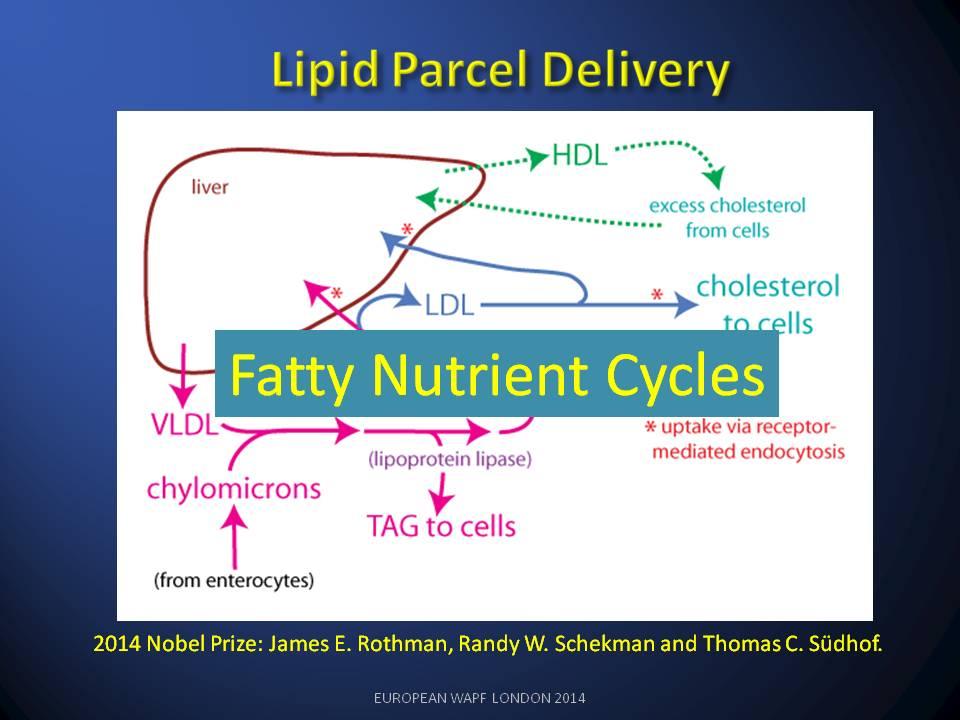
We
now know that LDL supplies essential fatty nutrients to all organs of
the body. The HDL is in effect the smaller ’empties’ returning the
waste fats to the liver for disposal or recycling.


Excess
dietary sugars can damage the Lipid LDL marker making it unusable.
That damage can be measured (HbA1c is a useful surrogate test for
sugar-damage). When LDL is damaged it builds up in the blood and less
HDL is returned from the organs of the body. The organs are starved
of vital fatty nutrition.


Statins
reduce the symptom of LDL build up but do nothing to fix the problem
of organs not getting fat soluble nutrition. Ultimately statins will
just add to the harm caused by sugar-damage.

Link

/* Style Definitions */
table.MsoNormalTable
{mso-style-name:”Table Normal”;
mso-tstyle-rowband-size:0;
mso-tstyle-colband-size:0;
mso-style-noshow:yes;
mso-style-priority:99;
mso-style-qformat:yes;
mso-style-parent:””;
mso-padding-alt:0cm 5.4pt 0cm 5.4pt;
mso-para-margin-top:0cm;
mso-para-margin-right:0cm;
mso-para-margin-bottom:10.0pt;
mso-para-margin-left:0cm;
line-height:115%;
mso-pagination:widow-orphan;
font-size:11.0pt;
font-family:”Calibri”,”sans-serif”;
mso-ascii-font-family:Calibri;
mso-ascii-theme-font:minor-latin;
mso-fareast-font-family:”Times New Roman”;
mso-fareast-theme-font:minor-fareast;
mso-hansi-font-family:Calibri;
mso-hansi-theme-font:minor-latin;}

Thank you Dr Verner Wheelock for the extensive critique of the reports . The Cochrane reports analysis was heroic and well structured. We had a huge debate about them at the time on THINCS (www.thincs.org).

For my part I shy away from statistical analysis which doesn’t include ‘All Cause Mortality’ figures. The reason being that failure to look at all the non-cardio deaths and drop-outs from trials cleans and amplifies the apparent benefits of Statins. This means we can never know the Numbers Needed to Harm NNH side of the medication.

My first ever review paper (G Wainwright et al., 2009) looking at the clinical impact of cholesterol lowering in all non-cardiovascular organs, was seminal in that it pointed up a fundamental flaw in the whole statin concept i.e. Cholesterol is vital and inhibiting its production is destined to create a wide and varied set of Adverse Events in statin users in the longer term.  That is why ‘all cause mortality’ data is not made available (caveat emptor).

In our second review paper(Seneff et al., 2011)  we became aware of the fact that LDL/HDL ratios were associated with LDL consumption by organs and not production by the liver. The whole LDL argument had been inverted.  If LDL is damaged by glycation,  LDL goes up and HDL falls.  The liver’s glycated-LDL is unused and the corresponding HDL return to the liver does not happen.

LDL HDL Cycles

How such a fundamental part of the lipid nutrition cycle could be missed is hard to understand. Obsession with statins and statin finance has done immense harm to cardio-medicine and I believe we are seeing the start of a major NICE scandal as the BMA object to the guidance.

G Wainwright, L Mascitelli, and M Goldstein (2009). Cholesterol-lowering therapy and cell membranes. Stable plaque at the expense of unstable membranes? Arch. Med. Sci. 5, 289–295.

Seneff, S., Wainwright, G., and Mascitelli, L. (2011). Is the metabolic syndrome caused by a high fructose, and relatively low fat, low cholesterol diet? Arch Med Sci 7, 8–20.

109. Cochrane Collaboration Evaluates Statins for Primary Prevention of Heart Disease | Verner’s Views

Link

The treatment and placebo groups’ mortality lines should be independent: a trend in one should have no consequential influence on the other. However:

  • All 4 lines are essentially identical for 1.6 years.
  • Then there is a departure — by both lines at the same time.

The fact that both lines — treatment and placebo — depart at the same time is important. Why should the treatment suddenly become beneficial at exactly the same time as non-treatment becomes detrimental?

The average line of both treatment and non-treatment groups follows a ‘natural’ mortality curve; any natural survival curve would have its slope increasing downward. (i.e. becoming more negative.)

Both treatment and placebo lines follow this natural curve for 1.6 years. Then both diverge. The placebo group shows this slope change increasing (negative) at a faster rate than all other lines. But, surely, it should follow the natural mortality curve. Why doesn’t it?

The slope of the treatment group is nearly constant from 1.8 years onward. It’s not a curve at all, but an almost straight line — and it shouldn’t be. What it says is that old people die at the same rate as younger ones. And life isn’t like that.

Is this evidence that the data of the 4S trial were not handled in an honest manner? Were deaths occurring in the treatment group assigned to the placebo group? Is this why the two curves, which should be independent, are apparently related? Or is there a mistake somewhere? Is there an error in logic?

Statins: Saviours of Mankind or Expensive Scam?

Link

Cholesterol and insulin
Xia et al. inhibited a late step in the biosynthesis of de-novo cholesterol in murine and human pancreatic β cells [8] and published their findings in 2008. They had previously shown that insulin secretion was sensitive to the acute removal of membrane cholesterol. They now demonstrate that the depletion of membrane cholesterol impairs calcium voltage channels, insulin secretory granule creation, and mobilisation and membrane fusion.
This paper [8] clearly demonstrates that a direct causal link exists between membrane cholesterol depletion and the failure of insulin secretion. Their work is in close accord with data from some statin trials, which also connect cholesterol reduction with increased risk of type 2 diabetes; indeed, statin use has been shown to be associated with a rise of fasting plasma glucose in patients with and without diabetes [9]. The underlying mechanisms of the potential adverse effects of statins on carbohydrate homeostasis are complex [10] and might be related to the lipophilicity of the statin [11]. Indeed, retrospective analysis of the West of Scotland Coronary Prevention Study (WOSCOPS) revealed that 5 years of treatment with pravastatin reduced diabetes incidence by 30% [12]. The authors suggested that although lowering of trigliceride levels could have influenced diabetes incidence, other mechanisms such as anti-inflammatory action might have been involved; however, in the multivariate Cox model, baseline total cholesterol did not predict the development of diabetes [12]. Furthermore, pravastatin did not decrease diabetes incidence in the LIPID trial which included glucose-intolerant patients [13]. On the other hand, in the JUPITER trial (Justification for the Use of Statins in Prevention: an Intervention Trial Evaluating Rosuvastatin), which studied apparently healthy persons without hyperlipidemia but with elevated high-sensitivity C-reactive protein levels [14], the risk of diabetes was increased by a factor of 1.25 [95% confidence interval (CI), 1.05 to 1.51] among individuals receiving rosuvastatin 20 mg daily with respect to placebo. Strikingly, among persons assigned to rosuvastatin, the median low density lipoprotein (LDL) cholesterol level at 12 months was 55 mg per deciliter [interquartile range, 44 to 72 (1.1 to 1.9)].
It is intriguing that salutary lifestyle measures, which might exert their beneficial action through an anti-inflammatory mechanism without a strong cholesterol-lowering effect, beyond reducing cardiovascular events and total mortality, reduce also the risk of diabetes and other chronic degenerative diseases. This fact may represent a ‘justification’ not to use a drug in low-risk primary prevention populations: lowering cholesterol at the expense of increasing diabetes might be counter-productive over the long-term.

8. Xia F, Xie L, Mihic A, et al. Inhibition of cholesterol biosynthesis impairs insulin secretion and voltage-gated calcium channel function in pancreatic beta-cells. Endocrinology 2008; 149: 5136-45.
9. Sukhija R, Prayaga S, Marashdeh M, et al. Effect of statins on fasting plasma glucose in diabetic and nondiabetic patients. J Investig Med 2009; 57: 495-9.
10. Szendroedi J, Anderwald C, Krssak M, et al. Effects of high-dose simvastatin therapy on glucose metabolism and ectopic lipid deposition in nonobese type 2 diabetic patients. Diabetes Care 2009; 32: 209-14.
11. Ishikawa M, Okajima F, Inoue N, et al. Distinct effects of pravastatin, atorvastatin, and simvastatin on insulin secretion from a beta-cell line, MIN6 cells. J Atheroscler Thromb 2006; 13: 329-35.
12. Freeman DJ, Norrie J, Sattar N, et

Cholesterol and insulin

Sugar-Damage in the Lipid Nutrition Cycle

Normal
0
false

false
false
false

EN-GB
X-NONE
X-NONE

/* Style Definitions */
table.MsoNormalTable
{mso-style-name:”Table Normal”;
mso-tstyle-rowband-size:0;
mso-tstyle-colband-size:0;
mso-style-noshow:yes;
mso-style-priority:99;
mso-style-qformat:yes;
mso-style-parent:””;
mso-padding-alt:0cm 5.4pt 0cm 5.4pt;
mso-para-margin-top:0cm;
mso-para-margin-right:0cm;
mso-para-margin-bottom:10.0pt;
mso-para-margin-left:0cm;
line-height:115%;
mso-pagination:widow-orphan;
font-size:11.0pt;
font-family:”Calibri”,”sans-serif”;
mso-ascii-font-family:Calibri;
mso-ascii-theme-font:minor-latin;
mso-fareast-font-family:”Times New Roman”;
mso-fareast-theme-font:minor-fareast;
mso-hansi-font-family:Calibri;
mso-hansi-theme-font:minor-latin;}

Maybe raised total blood serum cholesterol (TBSC) was trying to tell us something about health, but it was not the message we have been fed for the last 60 years.

Cholesterol has been misrepresented since the 1950s as a cause of heart disease. In reality an excess of dietary sugar that created an unhealthy lipid profiles in our blood stream.  Attempts to fix the problem by a drug called a statin added to our health woes because it targets the wrong issue.

When LDL nutrition is sugar-damaged (Glycated LDL) is raised in the blood. Unrecognised by our fat starved organs it is eventually scavenged by less discriminating visceral fat stores. There is less HDL (erroneously called ‘good’ cholesterol) being returned by the organs.

High Cholesterol (high levels of total blood serum cholesterol TBSC) when caused by damage to the LDL lipid parcels is a sign that lipid circulation is broken. These fats (LDL) will be scavenged to become visceral fats, deposited around the abdomen. This type of damage is associated with poor health.

Preventing the liver from producing new undamaged LDL by using a statin fails to address the problem of getting fatty nutrients to fat starved organs. The action of statins adds to the patients musculo-skeletal and neurological woes by depleting vital supplies of CoQ10 and dolichol.

The problem is fixed by reducing sugar-damage – as measured by an HbA1c test on sugar damage to a blood protein called haemoglobin. Several diabetes clinicians have observed this key connection between sugar damage and poor lipid profiles.

A Healthy Lipid Nutrition Cycle

If the total blood serum cholesterol (TBSC) is high and the organs are getting enough lipids, the blood lipid circulation is healthy.  The large parcels of fatty nutrients (LDL lipids) sent by the liver are consumed by our organs (receptor-mediated endocytosis) and the smaller fatty wrappers and left-over lipids (HDL Lipids) return to the liver. The Fatty Nutrients (LDL) and the recycled lipids (HDL) are in balance. Such a healthy-lipid ‘High-Cholesterol’ person is well nourished and likely to have a long and healthy life.

Sugar-Damage in a Broken Lipid Cycle

If the total blood serum cholesterol is high but the fatty nutrient droplets (LDLs) have sugar-damaged labels, the organs are unable to recognise and feed on them. The supply of fatty nutrients to organs is broken. 

The liver continues to supply fatty nutrients (albeit with damaged LDL labels), but the organs’ receptors are unable to recognise them. The organs thus become starved of their fatty nutrients. Like badly labelled parcels in a postal service, the sugar-damaged lipids build up in the blood (raised LDL) and fewer empty wrappers are returned to the liver (low HDL).

So it really doesn’t matter how high your total blood serum cholesterol (TBSC) is. What really counts is the damaged condition of the blood’s fatty nutrient parcels (LDL lipids). In our research review of metabolic syndromes4 (e.g. diabetes, heart disease, obesity, arthritis and dementia) we explained that the major cause of lipid damage was sugar-related.

Sugar Damage (AGEs)

The abbreviation AGE (Advanced Glycation End-product) is used to describe any sugar-damaged protein.  As we age, excessive amounts of free sugars in the blood5 may eventually cause damage quicker than the body can repair it.  The sugars attach by a chemical reaction and the sugar called fructose is known to be 10 times more reactive, and therefore more dangerous than our normal blood sugar (glucose). Since the 1970s we have been using increasing quantities of refined fructose (from high-fructose corn syrup). Its appealing sweetness, and ability to suppress the ‘no longer hungry’ receptor6 (ghrelin receptor) is driving excessive food intake.  Its ability to damage our fatty nutrients and lipid circulation is also driving waist-line obesity and its associated health problems4,7.

Checking for Damage in our Lipids

There is a ‘simple to administer’ commonly available blood test used to check for sugar-damage.  It is used to check the proteins in the blood of people who are diabetic or at risk of becoming diabetic. It tests for Glycated Haemoglobin (HbA1c) by counting the proportion of damaged molecules (per 1000) of Haemoglobin protein in the blood (mmol/mol). Researchers looking at ways of testing for damage to lipids, have found that sugar-damaged blood protein test (HbA1c), presents a very reasonable approximation of the state of sugar-damage in the blood lipids. Until there is a good general test for sugar-damage in blood lipids, this test (HbA1c) could be a sensible surrogate. This is a better way of assessing health than a simple cholesterol test (TBSC).

Improved sugar-damaged blood protein (HbA1c) scores in diabetic patients is accompanied by improvements in their lipid profiles. This could be very useful to anyone wanting to improve health outcomes by managing lifestyle and nutrition.

—————————————————————————-

For the full essay with references read follow this ‘bitly link’: http://bit.ly/1fkGYgb