Link

This article suggests that Total Serum Cholesterol is associated with protection against cancers:

In the present prospective cohort study, elevated TSC levels were significantly associated with decreased risk of cancer incidence in general and with several site-specific cancers in men and women. With the exception of male colon cancer we only found no or inverse relationships between TSC and cancer. Inverse relationships were found for cancers of the liver/intrahepatic bile duct, pancreas, non-melanoma of skin and lymph/hematopoietic tissue among men and for gallbladder, breast, melanoma of skin and lymph/hematopoietic tissue among women. From these, only associations of TSC with colon cancer, pancreas cancer, breast cancer, and skin cancer remained significant in the lag-time analysis. Restricting analyses to measurements before 1994, the onset of statin medication, revealed no major differences regarding the estimated associations.

High Cholesterol associated with decreased cancer risk!

Link

Our fats are formulated to be liquid at body temperature and liquids do not block tubes. And another thing….

Read Paul’s essay on Spacedoc’s pages

The risk of dying from a cerebral hemorrhage was 500% greater in those with low cholesterol compared to those with high levels.

Paul J. Rosch, M.D., M.A., F.A.C.P.
President of The American Institute of Stress,

Clinical Professor of Medicine and Psychiatry at New York Medical College,
Honorary Vice President of the International Stress Management Association and Chairman of its U.S. branch.

Paul Rosch

Saturated Fat and Cholesterol Do Not Cause Coronary Heart Disease

Link

glynthincs:

Biochemically and a priori my conscious existence as thoughts, ideas and memories has always seemed to be  quanta of organised energy hosted in a molecular biological self. Fifty years ago the origins of this idea came from my undergraduate reading of some philosophical essays by Erwin Schroedinger.  Physicists have embraced and debated the ideas of quantum existentialism and many books and blogs exist on the matter e.g.  WHY DOES THE WORLD EXIST? An Existential Detective Story By Jim Holt. 

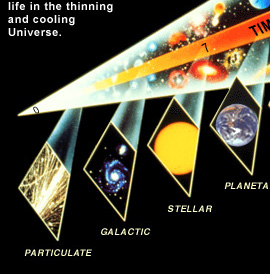
More recently we have had the extension of evolution to consider the thermodynamic drivers in the history of our universe in Cosmic Evolution as explained by Eric Chaisson.

My own particular experiences and readings lead me to hypothesise that, a priori, my conscious existence as thoughts, ideas and memories are just a quantum part of the whole of existence.

Interestingly Erwin Schrodinger had a deep connection to Hinduism (Vedanta), Buddhism, and Eastern philosophy in general, It was in his essays that I was intrigued by ideas of oneness and unity of mind as a universal quantum entanglement of our existence.  Our discrete biological individuality is illusory, perhaps we are a transient ‘swirl in the mists’ component of the cosmic evolutionary cycles
image


Quantum Existentialism as a Biochemical Reality

Link

Duane Graveline MD MPH (Author), Glyn Wainwright MSc (Introduction)

Try to imagine a drug possessing the ability to cause DNA mutations using the same mechanisms that have evolved for natural aging. When confronted with a patient experiencing weakness and unsteadiness, muscle aches and pains, memory loss and depression, the quite natural response from most doctors is, “You have to expect this kind of thing now; you are over 50”. Most doctors do not have a clue as to the truth. It is not natural aging that has depleted you so. This is premature aging – aging in months according to many statin victims – and this entire complex of symptoms from a drug so safe that many doctors feel it should be put in the drinking water. The class of drugs is called statins, simple reductase inhibitors capable not only of lowering cholesterol but also CoQ10 and dolichols as well, leading directly to mitochondrial damage and mutation. No, this is not impossible. It is happening today to thousands of us.

The Dark Side of Statins

Link

In Spacedoc’s newsletter this morning a link to a letter about eggs:

In a recent Atherosclerosis article, Spence et al set out to determine if consumption of egg yolks leads to carotid vascular damage [1]. The authors’ suggested premise is that egg yolks are a rich source of cholesterol, making them a risk factor for cerebrovascular disease.
How cholesterol became established as a risk factor for cerebrovascular disease  despite a historically weak and inconsistent association appears in great detail elsewhere [2]. Suffice it to say,
dietary cholesterol may have very little impact on serum cholesterol
[3], and serum cholesterol may have very little impact on vascular damage [4] and cerebrovascular disease [5]. (Moreover, if serum
cholesterol has any effect at all, it may be one of protection e.g.,
against hemorrhagic and total stroke in hypertensives [5,6]).

Lucan SC, Egg on their faces (probably not in their necks); The yolk of the tenuous cholesterol-to-plaque conclusion, Atherosclerosis (2012), http://dx.doi.org/10.1016/j.atherosclerosis.2012.10.076

In Defence of Eggs

Link

When the British physiologist John Yudkin published Pure, White and Deadly—his 1972 book linking heart disease to sugar consumption—he met strong opposition from the sugar industry. As Geoff Watts writes in this week’s BMJ (doi:10.1136/bmj.e7800), “jobs and research grants that might predictably have come Yudkin’s way did not materialise.” Attacks also included the abrupt cancellation of conferences suspected of promulgating anti-sugar findings, and the book was dismissed as a work of fiction. Enter fat in the role of chief culprit in the rise in heart disease. The fat hypothesis, the chief proponent of which was the American biologist Ancel Keys, influenced policy makers and captured the popular imagination. Meanwhile, writes Watts, medical interest in the sugar hypothesis faded. Yudkin’s book fell out of print and low fat became the buzz phrase in nutrition.

image

But in recent years, and with rising obesity becoming one of the main health concerns in the developed world, the sugar hypothesis has started to regain momentum. Recent anti-sugar initiatives include New York city’s restriction on the size of fizzy drinks (BMJ 2012;345:e6768). At the end of last year Penguin Books reissued Pure, White and Deadly, with a new and enthusiastic introduction by US endocrinologist Robert Lustig, which in this week’s BMJ Jack Winkler hails as a medical classic (doi:10.1136/bmj.e8612). And, as if to forestall any further policy initiatives against sugary beverages, this week Coca-Cola launched a television advertisement in the United States acknowledging the obesity problem and attempting to defend the company’s record in producing low calorie drinks.

How science is going sour on sugar – BMJ

Link

At last we are getting some movement on Cholesterol’s innocence and sugar’s guilt

BMJ 2013;346:e7800

BMJ – “Sugar and the heart: old ideas revisited”

Link

From issue 2899 of New Scientist magazine, page 30-34.

Far from being passive hangers-on, symbiotic microbes may shape the evolution of the plants and animals that play host to them

DISPOSING of corpses can be tricky. Bury them in a shallow grave and hungry animals are liable to dig them up. Our body faces a somewhat similar problem when it comes to disposing of unwanted substances. One of the ways the liver purifies blood is by adding the equivalent of a “chuck this out” label to molecules, but this label is made of a kind of sugar – and the bugs in our gut have a sweet tooth. Some produce a special enzyme that allows them to cut off the sugar and eat it, which often results in compounds being recycled within the body rather than disposed of.

Back in the 1980s, Richard Jefferson used the enzyme to develop a powerful technique now relied upon by thousands of genetic engineers around the world. At the same time, he was intrigued by the enzyme’s normal role. Its recycling effect helps determine the blood levels of many compounds, including important substances such as sex hormones. Jefferson realised that the bacteria within us, far from being passive hangers-on, must affect us in profound ways.

In the past decade, this view has started to become mainstream. Study after study has shown how the microbes living in us and on us – the microbiome – can affect our health and even happiness. But back in the 1980s, Jefferson took this idea even further. If microbes are so important, he reasoned, they must play a big role in evolution too. He came up with what he called the hologenome theory of evolution. “The hologenome is the biggest breakthrough in thinking I’ve had in my life,” he says.

image

Symbiotic Microbes may shape our evolution!

Link

Tom Naughton’s blog makes some interesting observations about the USDA announcement:

A new report from the USDA says Americans are eating less fat than we did 30 years ago.  Here’s the opening from an online article about the report:

On average, Americans are eating 10g less fat per day today than they were in the late 1970s, according to new research.  In a report comparing food consumption patterns in 1977-78 versus 2005-2008, Biing-Hwan Lin and Joanne Guthrie from USDA’s Economic Research Service found that on average, Americans consumed 75.2g of fat in 2005-08 compared with 85.6g in 1977-78.

Meanwhile, the percentage of total calories derived from fat also declined substantially from 39.7% to 33.4% between 1977 and 2008, said the authors.

Hallelujah!  Now that USDA itself is admitting we’re eating less fat, surely they’ll finally also admit that the rise we’ve seen in obesity and metabolic syndrome in the past 30 years can’t be blamed on fat.  I can just hear the press conference where they announce they’re allowing whole milk back in schools …

Tom

USDA Report: We Eat Less Fat, But Fat Is Killing Us?